








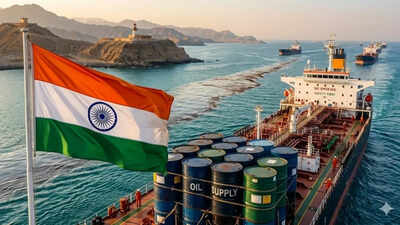
NEW DELHI: The military strikes on Saturday put the spotlight on the Strait of Hormuz, a critical global shipping route for India and other Asian countries, prompting officials here to activate contingency plans to safeguard energy supplies, reports Atul Mathur.While keeping a close watch on the unfolding situation, they also have an eye on crude as global benchmark Brent closed at a seven-month high of $72.87 on Friday. Prices are expected to spike after Saturday’s attack. Supplies are unlikely to be hit immediately although shipments via the Strait were suspended.
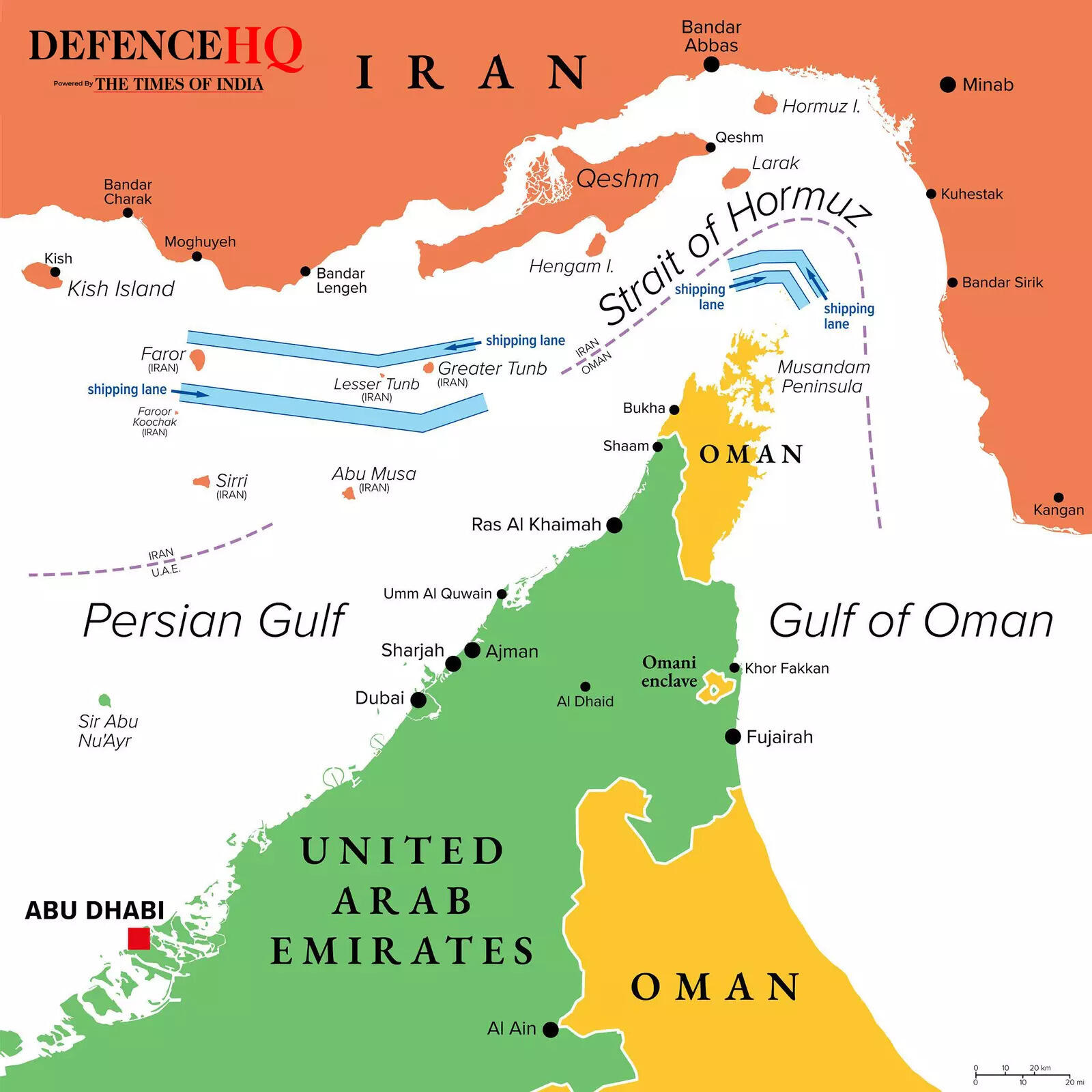
OPEC+, the group of oil producing nations, is meeting Sunday after Saudi Arabia and UAE raised exports in anticipation of the US-Israel strikes. A modest increase in supply was planned.The Strait of Hormuz lies between Oman and Iran and links the Persian Gulf with the Gulf of Oman and the Arabian Sea, handling nearly 20% of the world’s seaborne oil trade. India imports nearly 90% of its crude requirement – about 5.5 million barrels per day (mbpd) – and more than 40% of it comes from West Asia through this narrow passage. Officials said this share increased to about 50% in the first two months of this year. India ready with options if supplies get disrupted About half of the LNG supplies reaching India also transit through this route.With limited alternatives to bypass the Strait of Hormuz, any disruption would have major consequences for global oil markets. It would not only trigger a surge in global crude prices, but diversification of imports would also add to freight and insurance costs. According to analysts, Brent crude has already risen from about $65 per barrel to $72-73 in the past few days and may climb to $80 if geopolitical tensions persist. Every $10 per barrel increase in crude prices could add $13-14 billion annually to India’s import bill.In India, officials said pre-emptive measures such as strengthening strategic oil reserves and diversifying imports from 41 countries are already in place. India may also explore importing part of its West Asian supplies through the 360-km Habshan-Fujairah oil pipeline operated by ADNOC, which has a capacity of 1.5 mbpd, and the 1,200-km East-West crude oil pipeline controlled by Saudi Aramco, which has a capacity of 5 mbpd and provides access to the Red Sea.Multiple options have been explored including increasing the sourcing from the US, West Africa, Russia and Latin America through the eastern route, if supplies from West Asia are disrupted.India’s strategic petroleum reserves – including cavern storage, refinery stocks and floating inventories at ports – can last up to 74 days to meet demand during any global crisis, an official said.An executive at a state-owned refiner said the situation in the region has been on the boil for the past few weeks. “Though there has been no disruption to supplies, internal discussions on alternative routes have been underway,” the executive said.