







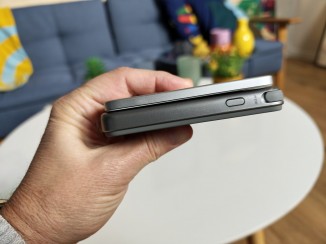
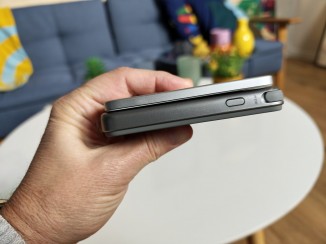
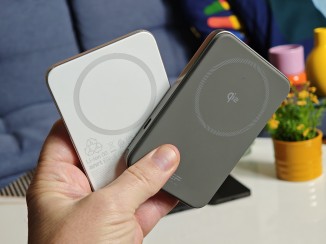
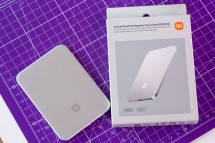
Are two 5,000mAh power banks the same size? Before you say “of course”, we need to clarify what we mean by size. In terms of physical size, putting the new Xiaomi UltraThin Magnetic Power Bank 5000 15W next to a 5,000mAh power bank from EcoFlow shows a stark difference.
The Xiaomi power bank weighs only 98g and measures 98.5 x 71.5 x 6.0mm. The EcoFlow power bank is nearly twice as heavy at 180g and it is more than twice as thick at 108.0 x 70.0 x 14.4mm. To be fair, some of that is due to the integrated charging cable and kickstand on the EcoFlow, but the Xiaomi uses a cutting-edge Silicon-Carbon battery (16% silicon content), which keeps it thinner and lighter than the competition.
Xiaomi UltraThin Magnetic Power Bank 5000 15W vs. 5,000mAh EcoFlow power bank
You would at least think that they are the same size in terms of charge capacity – both are rated at 5,000mAh, right? Well, let’s find out. We took an Oppo Find X8 Ultra and we tried out both batteries (discharging the Oppo down to 20% before each test). Note that while both are wireless power banks, we used wired charging because it is more efficient – using USB-C will have lower losses and give these power banks the best shot.
Another important thing to mention is that while both power banks can send up to 15W wirelessly, they are faster over USB-C – up to 22.5W for the Xiaomi and up to 30W for the EcoFlow (the Oppo does up to 55W over PPS, so it won’t limit the batteries).
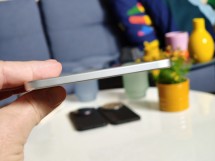
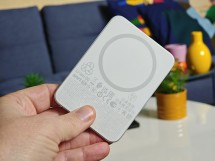
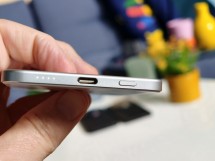
Xiaomi UltraThin Magnetic Power Bank 5000 15W
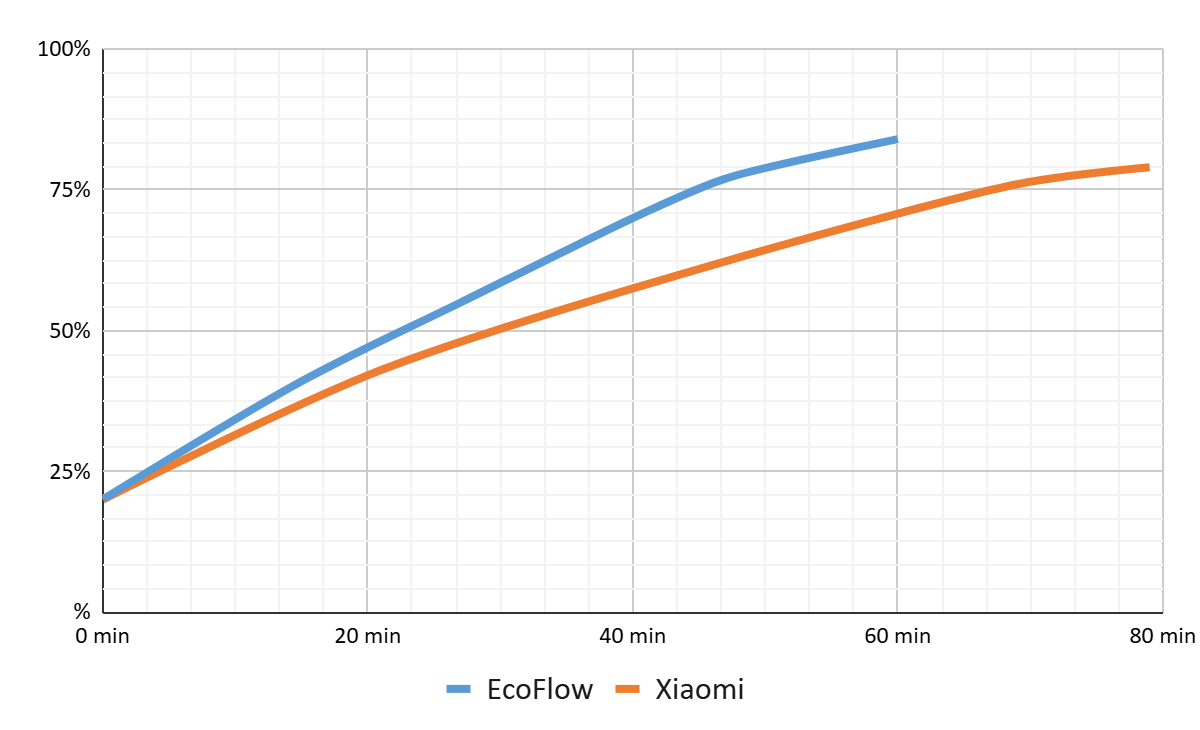
The EcoFlow’s higher speed is noticeable right out of the gate – it got the Find X8 Ultra from 20% up to 41% in 15 minutes. The Xiaomi battery needed around 20 minutes to get to that same point. Throughout the test, the EcoFlow’s charging speed was consistently 35% faster, which matches the stated specs almost perfectly.
The EcoFlow lasted an hour before its battery was depleted and it got the phone up to 84% in the process. The Xiaomi battery was slower and it took 19 minutes longer before it was done. The Find X8 Ultra was at 79% charge afterwards.
Xiaomi UltraThin Magnetic Power Bank 5000 15W vs. 5,000mAh EcoFlow power bank
For a closer look at the test, you can also watch our video that shows how each power bank performed.
The Find X8 Ultra has a 6,100mAh battery (which was at 20% before the start of each test) and we can use some back-of-the-napkin math to see how much each power bank added to the phone’s battery.
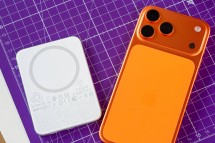
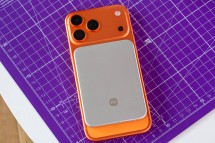
Xiaomi UltraThin Magnetic Power Bank 5000 15W on an iPhone 17 Pro
The EcoFlow added around 3,900mAh, while the Xiaomi added about 3,600mAh. That is around 8.5% more power from the EcoFlow. So, now we have our answer – no, two 5,000mAh batteries are not necessarily the same size. Even if the two have the same size cells, the various inefficiencies related to moving electricity from one battery to another over USB-C take their toll.