








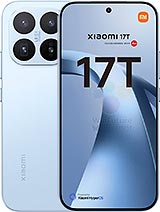
Xiaomi 17T vs. 17T Pro


The Xiaomi 17T series is here, eight months after the 15T release and we are here to answer the same question users had before – if the Xiaomi 17T is good enough or whether the Xiaomi 17T Pro is the better choice despite its considerably higher price tag.

As of now, the Xiaomi 17T and 17T Pro price gap is about €150, so it’s important to consider all aspects and nuances before digging deeper into your pocket for the Pro model. You might actually be perfectly okay with the lower-end Xiaomi 17T and save a few bucks, too. On the other hand, some of you may appreciate the larger battery, wireless charging and stronger chipset.

Table of Contents:

For starters, you can compare the complete specs sheets or directly continue with our editor’s assessment in the following text.

Size comparison

Xiaomi 17T

Xiaomi
17T

200 g


157.6 x 75.2 x 8.17 mm
(6.2 x 2.96 x 0.32 in)

Unlike the previous generation, where the 15T and 15T Pro had the same footprint, the 17T is noticeably smaller than the 17T Pro. Since the vanilla has a smaller display, it’s shorter, narrower and lighter than its Pro counterpart.

Design and build-wise, the two phones are identical. They feature IP68 ingress protection and Gorilla Glass 7i panels on the front and back, held together by an aluminum frame. Even the color options are identical.

At the end of the day, the 17T will likely be the preferable option for users looking for a more compact phone.

Display comparison

Xiaomi 17T

Xiaomi
17T

6.59″


AMOLED
120Hz


1268×2756
pixels


460
ppi


1035
nits

Size-wise, the 17T Pro’s display has an advantage – it’s a tad bigger. However, when it comes to features and performance, both displays are pretty much identical. They are equally bright, have 12-bit color depth and support Dolby Vision and HDR10+.

The max display refresh rate is the only difference between the two, and it may not matter to most folks. The 17T Pro’s panel supports up to 144Hz refresh rate, while the 17T’s screen caps at 120Hz. However, during our 17T Pro review, we found that 144Hz was rarely utilized. Almost never, actually.

Battery life

It’s perhaps no surprise that the 17T Pro outlasts the 17T in our battery tests due to its larger battery. While the Pro has a 7,000 mAh cell, the vanilla settles for a smaller 6,500 mAh unit. As a result, the 17T Pro outperformed the 17T in every battery test.

We suspect display and chip efficiency are at play here as well, since the 17T Pro posted disproportionally higher screen-on and screen-off runtimes.

Charging speed

Since the 17T Pro offers higher charging power than the 17T (100W vs. 67W), it’s no surprise that it’s faster at the 15 and 30-minute checkpoints, and at full charge. The difference isn’t trivial either. The 17T Pro is considerably faster.

Additionally, the 17T Pro supports 50W fast wireless charging when paired with a Xiaomi wireless charger.

Speaker test

Somewhat surprisingly, the Xiaomi 17T’s speakers are not just louder, but also livelier in a sense. The mids are more pronounced, giving the vocals a bit more life, although the bass in both cases is a bit underwhelming, even for smartphone-class speakers. The 17T is definitely more likable in this scenario.

Performance

Both devices are powered by MediaTek’s Dimensity lineup of chips, but as per tradition, the Pro gets the highest-tier SoC, which right now is the Dimensity 9500. The non-Pro settles for a mid-range Dimensity 8500 chipset.

Xiaomi 17T

Xiaomi
17T


Dimensity 8500 Ultra
4 nm


256GB 12GB RAM
base config

Both handsets offer 12GB/256GB memory configurations by default, but only the Pro goes up to 1TB internal storage.

Benchmark performance

Xiaomi 17T

Xiaomi
17T


AnTuTu 10
1,640,834


Geekbench 6
6,607


3D Mark Wild Life
3,563

Xiaomi 17T Pro

Xiaomi
17T Pro


AnTuTu 10
2,795,030


Geekbench 6
9,766


3D Mark Wild Life
6,939

Despite what the chipsets’ names might suggest, the difference in performance is not trivial. The Xiaomi 17T Pro’s Dimensity 9500 outperforms the 17 T’s Dimensity 8500 by almost 50% in the pure CPU benchmark tests and by up to 70% in combined scenarios like AnTuTu. In the GPU-heavy 3DMark Wildlife Extreme scenario, the 17T Pro shows nearly 2x better performance.

So if you are looking for a better raw performance, as you plan on gaming, or you are just looking for some future-proofing, the 17T Pro is the better pick here.

Both handsets are entitled to 5 major OS upgrades.

Camera comparison

The Xiaomi 17T inherits most of its camera hardware from last year’s 15T, though it does upgrade one of the modules – the telephoto has been upgraded from 2x zoom to 5x zoom and is now the same as on the Pro. The Pro, meanwhile, doesn’t make any generational changes of that magnitude, keeping what was already very capable hardware almost intact.

The 17T’s main camera is based on what Xiaomi calls the Light Fusion 800 sensor while the 17T Pro’s sensor is the Light Fusion 950. They’re OmniVision-sourced 50MP sensors with the most significant difference being sheer size – it’s a 1/1.55″ optical format on the 17T vs. a 1/1.3″ one on the 17T Pro.

The telephoto cameras are both using the same Samsung 50MP JN5 sensor with a 115mm-equivalent lens in front of it. The 13MP fixed-focus ultrawides and the 32MP selfie cameras are also the same on both phones.

Image quality

Daylight

Both main cameras capture great photos in bright daylight. You can expect high contrast and vibrant colors so you won’t be missing any pop. Detail is very good without aggressive processing on both phones. It’s hard to pick one over the other.




Daylight, main camera (1x): Xiaomi 17T - 23mm, f/1.7, ISO 50, 1/3032s (4096x3072px) - Xiaomi 17T vs. 17T Pro

Daylight, main camera (1x): Xiaomi 17T Pro - 23mm, f/1.7, ISO 50, 1/2847s (4096x3072px) - Xiaomi 17T vs. 17T Pro

Daylight, main camera (1x): Xiaomi 17T - 23mm, f/1.7, ISO 50, 1/5377s (4096x3072px) - Xiaomi 17T vs. 17T Pro

Daylight, main camera (1x): Xiaomi 17T Pro - 23mm, f/1.7, ISO 50, 1/4983s (4096x3072px) - Xiaomi 17T vs. 17T Pro


Daylight, main camera (1x): Xiaomi 17T - 23mm, f/1.7, ISO 50, 1/181s (4096x3072px) - Xiaomi 17T vs. 17T Pro

Daylight, main camera (1x): Xiaomi 17T Pro - 23mm, f/1.7, ISO 125, 1/461s (4096x3072px) - Xiaomi 17T vs. 17T Pro

Daylight, main camera (1x): Xiaomi 17T - 23mm, f/1.7, ISO 100, 1/50s (4096x3072px) - Xiaomi 17T vs. 17T Pro

Daylight, main camera (1x): Xiaomi 17T Pro - 23mm, f/1.7, ISO 160, 1/74s (4096x3072px) - Xiaomi 17T vs. 17T Pro


Daylight, main camera (1x): Xiaomi 17T • Xiaomi 17T Pro

2x zoom shots are very good too, from both phones. There might be a small advantage to the Pro in terms of sharpness, but it just might also be a different style of processing, with a higher level of sharpening. Again, hardly a differentiator.




Daylight, main camera (2x): Xiaomi 17T - 46mm, f/1.7, ISO 50, 1/1616s (4096x3072px) - Xiaomi 17T vs. 17T Pro

Daylight, main camera (2x): Xiaomi 17T Pro - 46mm, f/1.7, ISO 125, 1/1444s (4096x3072px) - Xiaomi 17T vs. 17T Pro

Daylight, main camera (2x): Xiaomi 17T - 46mm, f/1.7, ISO 50, 1/3348s (4096x3072px) - Xiaomi 17T vs. 17T Pro

Daylight, main camera (2x): Xiaomi 17T Pro - 46mm, f/1.7, ISO 125, 1/2622s (4096x3072px) - Xiaomi 17T vs. 17T Pro


Daylight, main camera (2x): Xiaomi 17T - 46mm, f/1.7, ISO 160, 1/100s (4096x3072px) - Xiaomi 17T vs. 17T Pro

Daylight, main camera (2x): Xiaomi 17T Pro - 46mm, f/1.7, ISO 200, 1/50s (4096x3072px) - Xiaomi 17T vs. 17T Pro

Daylight, main camera (2x): Xiaomi 17T - 46mm, f/1.7, ISO 125, 1/50s (4096x3072px) - Xiaomi 17T vs. 17T Pro

Daylight, main camera (2x): Xiaomi 17T Pro - 46mm, f/1.7, ISO 320, 1/50s (4096x3072px) - Xiaomi 17T vs. 17T Pro


Daylight, main camera (2x): Xiaomi 17T • Xiaomi 17T Pro

What used to immediately set the last-gen models apart is the telephoto reach but with these two that no longer applies. With the same hardware on both, you get excellent zoom power even on the non-Pro – for less money. There are minor differences in color reproduction, but we’re also seeing an edge in sharpness and detail definition on the 17T – it’s not like the Pro is bad, but the non-Pro is somehow a little better.




Daylight, telephoto camera (5x): Xiaomi 17T - 115mm, f/3.0, ISO 50, 1/264s (4096x3072px) - Xiaomi 17T vs. 17T Pro

Daylight, telephoto camera (5x): Xiaomi 17T Pro - 115mm, f/3.0, ISO 50, 1/253s (4096x3072px) - Xiaomi 17T vs. 17T Pro

Daylight, telephoto camera (5x): Xiaomi 17T - 115mm, f/3.0, ISO 50, 1/196s (4096x3072px) - Xiaomi 17T vs. 17T Pro

Daylight, telephoto camera (5x): Xiaomi 17T Pro - 115mm, f/3.0, ISO 50, 1/200s (4096x3072px) - Xiaomi 17T vs. 17T Pro


Daylight, telephoto camera (5x): Xiaomi 17T - 115mm, f/3.0, ISO 1000, 1/50s (4096x3072px) - Xiaomi 17T vs. 17T Pro

Daylight, telephoto camera (5x): Xiaomi 17T Pro - 115mm, f/3.0, ISO 1000, 1/50s (4096x3072px) - Xiaomi 17T vs. 17T Pro

Daylight, telephoto camera (5x): Xiaomi 17T - 115mm, f/3.0, ISO 800, 1/50s (4096x3072px) - Xiaomi 17T vs. 17T Pro

Daylight, telephoto camera (5x): Xiaomi 17T Pro - 115mm, f/3.0, ISO 1000, 1/50s (4096x3072px) - Xiaomi 17T vs. 17T Pro


Daylight, telephoto camera (5x): Xiaomi 17T • Xiaomi 17T Pro

There’s a similar pattern at 10x too – the 17T is a tiny bit sharper, but even if it was as sharp or even a little less sharp, the important thing is that the non-Pro is capable of solid 10x results. Of course, so too is the Pro, but that’s not news.




Daylight, telephoto camera (10x): Xiaomi 17T - 230mm, f/3.0, ISO 50, 1/234s (4096x3072px) - Xiaomi 17T vs. 17T Pro

Daylight, telephoto camera (10x): Xiaomi 17T Pro - 230mm, f/3.0, ISO 50, 1/169s (4096x3072px) - Xiaomi 17T vs. 17T Pro

Daylight, telephoto camera (10x): Xiaomi 17T - 230mm, f/3.0, ISO 50, 1/230s (4096x3072px) - Xiaomi 17T vs. 17T Pro

Daylight, telephoto camera (10x): Xiaomi 17T Pro - 230mm, f/3.0, ISO 50, 1/237s (4096x3072px) - Xiaomi 17T vs. 17T Pro


Daylight, telephoto camera (10x): Xiaomi 17T - 230mm, f/3.0, ISO 1000, 1/100s (4096x3072px) - Xiaomi 17T vs. 17T Pro

Daylight, telephoto camera (10x): Xiaomi 17T Pro - 230mm, f/3.0, ISO 1250, 1/100s (4096x3072px) - Xiaomi 17T vs. 17T Pro

Daylight, telephoto camera (10x): Xiaomi 17T - 230mm, f/3.0, ISO 1000, 1/100s (4096x3072px) - Xiaomi 17T vs. 17T Pro

Daylight, telephoto camera (10x): Xiaomi 17T Pro - 230mm, f/3.0, ISO 640, 1/50s (4096x3072px) - Xiaomi 17T vs. 17T Pro


Daylight, telephoto camera (10x): Xiaomi 17T • Xiaomi 17T Pro

There’s not much to separate the two models’ ultrawide photos – the 17T’s may be a little more saturated, but it’s not like Pro is lacking in that respect. Very good sharpness for a non-flagship ultrawide, wide dynamic range, what’s not to like.




Daylight, ultrawide camera (0.6x): Xiaomi 17T - 15mm, f/2.2, ISO 50, 1/554s (4000x3000px) - Xiaomi 17T vs. 17T Pro

Daylight, ultrawide camera (0.6x): Xiaomi 17T Pro - 15mm, f/2.2, ISO 50, 1/512s (4000x3000px) - Xiaomi 17T vs. 17T Pro

Daylight, ultrawide camera (0.6x): Xiaomi 17T - 15mm, f/2.2, ISO 50, 1/481s (4000x3000px) - Xiaomi 17T vs. 17T Pro

Daylight, ultrawide camera (0.6x): Xiaomi 17T Pro - 15mm, f/2.2, ISO 50, 1/425s (4000x3000px) - Xiaomi 17T vs. 17T Pro


Daylight, ultrawide camera (0.6x): Xiaomi 17T - 15mm, f/2.2, ISO 200, 1/50s (4000x3000px) - Xiaomi 17T vs. 17T Pro

Daylight, ultrawide camera (0.6x): Xiaomi 17T Pro - 15mm, f/2.2, ISO 160, 1/50s (4000x3000px) - Xiaomi 17T vs. 17T Pro

Daylight, ultrawide camera (0.6x): Xiaomi 17T - 15mm, f/2.2, ISO 500, 1/33s (4000x3000px) - Xiaomi 17T vs. 17T Pro

Daylight, ultrawide camera (0.6x): Xiaomi 17T Pro - 15mm, f/2.2, ISO 640, 1/38s (4000x3000px) - Xiaomi 17T vs. 17T Pro


Daylight, ultrawide camera (0.6x): Xiaomi 17T • Xiaomi 17T Pro

Low light

You’d expect to see more of a meaningful advantage for the Pro in the dark at 1x, but we wouldn’t really say that’s the case. Admittedly, it has a more nuanced shadow development and will tend to get you brighter lower midtones, which makes for a more universally likeable look, we’ll give it that. But it also does a more heavy-handed sharpening job. The non-Pro’s darker shadows can be a bit of a downside in gloomier or more contrasty scenes, but ultimately, the non-Pro isn’t significantly outperformed here either.




Low-light, main camera (1x): Xiaomi 17T - 23mm, f/1.7, ISO 320, 1/17s (4096x3072px) - Xiaomi 17T vs. 17T Pro

Low-light, main camera (1x): Xiaomi 17T Pro - 23mm, f/1.7, ISO 50, 1/20s (4096x3072px) - Xiaomi 17T vs. 17T Pro

Low-light, main camera (1x): Xiaomi 17T - 23mm, f/1.7, ISO 400, 1/10s (4096x3072px) - Xiaomi 17T vs. 17T Pro

Low-light, main camera (1x): Xiaomi 17T Pro - 23mm, f/1.7, ISO 80, 1/14s (4096x3072px) - Xiaomi 17T vs. 17T Pro


Low-light, main camera (1x): Xiaomi 17T - 23mm, f/1.7, ISO 6400, 1/8s (4096x3072px) - Xiaomi 17T vs. 17T Pro

Low-light, main camera (1x): Xiaomi 17T Pro - 23mm, f/1.7, ISO 5000, 1/8s (4096x3072px) - Xiaomi 17T vs. 17T Pro

Low-light, main camera (1x): Xiaomi 17T - 23mm, f/1.7, ISO 160, 1/25s (4096x3072px) - Xiaomi 17T vs. 17T Pro

Low-light, main camera (1x): Xiaomi 17T Pro - 23mm, f/1.7, ISO 50, 1/25s (4096x3072px) - Xiaomi 17T vs. 17T Pro


Low-light, main camera (1x): Xiaomi 17T • Xiaomi 17T Pro

Similarly, there’s not a world of difference between the 2x shots – or rather, what difference there is, isn’t really one that can sway you in either direction.




Low-light, main camera (2x): Xiaomi 17T - 46mm, f/1.7, ISO 640, 1/20s (4096x3072px) - Xiaomi 17T vs. 17T Pro

Low-light, main camera (2x): Xiaomi 17T Pro - 46mm, f/1.7, ISO 1000, 1/20s (4096x3072px) - Xiaomi 17T vs. 17T Pro

Low-light, main camera (2x): Xiaomi 17T - 46mm, f/1.7, ISO 1250, 1/11s (4096x3072px) - Xiaomi 17T vs. 17T Pro

Low-light, main camera (2x): Xiaomi 17T Pro - 46mm, f/1.7, ISO 1250, 1/14s (4096x3072px) - Xiaomi 17T vs. 17T Pro


Low-light, main camera (2x): Xiaomi 17T - 46mm, f/1.7, ISO 1250, 1/14s (4096x3072px) - Xiaomi 17T vs. 17T Pro

Low-light, main camera (2x): Xiaomi 17T Pro - 46mm, f/1.7, ISO 1600, 1/17s (4096x3072px) - Xiaomi 17T vs. 17T Pro

Low-light, main camera (2x): Xiaomi 17T - 46mm, f/1.7, ISO 320, 1/33s (4096x3072px) - Xiaomi 17T vs. 17T Pro

Low-light, main camera (2x): Xiaomi 17T Pro - 46mm, f/1.7, ISO 80, 1/25s (4096x3072px) - Xiaomi 17T vs. 17T Pro


Low-light, main camera (2x): Xiaomi 17T • Xiaomi 17T Pro

Both phones will also get you very good low-light photos at 5x. In a slight turn of events, the 17T might be a little heavier on the sharpening than the Pro, but despite this difference, both capture great detail. The Pro’s livelier colors and somewhat brighter shadows may be more likeable, but the 17T is plenty good enough in its own ways.




Low-light, telephoto camera (5x): Xiaomi 17T - 115mm, f/3.0, ISO 3200, 1/20s (4096x3072px) - Xiaomi 17T vs. 17T Pro

Low-light, telephoto camera (5x): Xiaomi 17T Pro - 115mm, f/3.0, ISO 2500, 1/20s (4096x3072px) - Xiaomi 17T vs. 17T Pro

Low-light, telephoto camera (5x): Xiaomi 17T - 115mm, f/3.0, ISO 12800, 1/8s (4096x3072px) - Xiaomi 17T vs. 17T Pro

Low-light, telephoto camera (5x): Xiaomi 17T Pro - 115mm, f/3.0, ISO 4000, 1/9s (4096x3072px) - Xiaomi 17T vs. 17T Pro


Low-light, telephoto camera (5x): Xiaomi 17T - 115mm, f/3.0, ISO 3200, 1/9s (4096x3072px) - Xiaomi 17T vs. 17T Pro

Low-light, telephoto camera (5x): Xiaomi 17T Pro - 115mm, f/3.0, ISO 4000, 1/10s (4096x3072px) - Xiaomi 17T vs. 17T Pro

Low-light, telephoto camera (5x): Xiaomi 17T - 115mm, f/3.0, ISO 2000, 1/33s (4096x3072px) - Xiaomi 17T vs. 17T Pro

Low-light, telephoto camera (5x): Xiaomi 17T Pro - 115mm, f/3.0, ISO 2000, 1/25s (4096x3072px) - Xiaomi 17T vs. 17T Pro


Low-light, telephoto camera (5x): Xiaomi 17T • Xiaomi 17T Pro

The difference in sharpening levels remains at 10x, but again, both phones produce solid shots – all the more reason to prefer the non-Pro, saving a little cash in the process.




Low-light, telephoto camera (10x): Xiaomi 17T - 230mm, f/3.0, ISO 3200, 1/20s (4096x3072px) - Xiaomi 17T vs. 17T Pro

Low-light, telephoto camera (10x): Xiaomi 17T Pro - 230mm, f/3.0, ISO 2500, 1/17s (4096x3072px) - Xiaomi 17T vs. 17T Pro

Low-light, telephoto camera (10x): Xiaomi 17T - 230mm, f/3.0, ISO 3200, 1/17s (4096x3072px) - Xiaomi 17T vs. 17T Pro

Low-light, telephoto camera (10x): Xiaomi 17T Pro - 230mm, f/3.0, ISO 2500, 1/14s (4096x3072px) - Xiaomi 17T vs. 17T Pro


Low-light, telephoto camera (10x): Xiaomi 17T - 230mm, f/3.0, ISO 4000, 1/13s (4096x3072px) - Xiaomi 17T vs. 17T Pro

Low-light, telephoto camera (10x): Xiaomi 17T Pro - 230mm, f/3.0, ISO 5000, 1/14s (4096x3072px) - Xiaomi 17T vs. 17T Pro

Low-light, telephoto camera (10x): Xiaomi 17T - 230mm, f/3.0, ISO 1600, 1/25s (4096x3072px) - Xiaomi 17T vs. 17T Pro

Low-light, telephoto camera (10x): Xiaomi 17T Pro - 230mm, f/3.0, ISO 1600, 1/25s (4096x3072px) - Xiaomi 17T vs. 17T Pro


Low-light, telephoto camera (10x): Xiaomi 17T • Xiaomi 17T Pro

The ultrawides offer more or less the same level of performance on both phones – good sharpness, wide dynamic range, nice colors.




Low-light, ultrawide camera (0.6x): Xiaomi 17T - 15mm, f/2.2, ISO 3200, 1/7s (4000x3000px) - Xiaomi 17T vs. 17T Pro

Low-light, ultrawide camera (0.6x): Xiaomi 17T Pro - 15mm, f/2.2, ISO 3200, 1/8s (4000x3000px) - Xiaomi 17T vs. 17T Pro

Low-light, ultrawide camera (0.6x): Xiaomi 17T - 15mm, f/2.2, ISO 5000, 1/7s (4000x3000px) - Xiaomi 17T vs. 17T Pro

Low-light, ultrawide camera (0.6x): Xiaomi 17T Pro - 15mm, f/2.2, ISO 4000, 1/6s (4000x3000px) - Xiaomi 17T vs. 17T Pro


Low-light, ultrawide camera (0.6x): Xiaomi 17T - 15mm, f/2.2, ISO 6400, 1/7s (4000x3000px) - Xiaomi 17T vs. 17T Pro

Low-light, ultrawide camera (0.6x): Xiaomi 17T Pro - 15mm, f/2.2, ISO 6400, 1/5s (4000x3000px) - Xiaomi 17T vs. 17T Pro

Low-light, ultrawide camera (0.6x): Xiaomi 17T - 15mm, f/2.2, ISO 2500, 1/8s (4000x3000px) - Xiaomi 17T vs. 17T Pro

Low-light, ultrawide camera (0.6x): Xiaomi 17T Pro - 15mm, f/2.2, ISO 2500, 1/8s (4000x3000px) - Xiaomi 17T vs. 17T Pro


Low-light, ultrawide camera (0.6x): Xiaomi 17T • Xiaomi 17T Pro

Selfies

Selfies are similar in most ways, though there is a relatively pronounced difference in skin tones, with the Pros probably more to our liking, and also the Pro is doing better in the dark. Still, probably not enough of a difference to go Pro.




Selfies comparison: Xiaomi 17T - 21mm, f/2.2, ISO 800, 1/33s (6560x4928px) - Xiaomi 17T vs. 17T Pro

Selfies comparison: Xiaomi 17T Pro - 21mm, f/2.2, ISO 640, 1/33s (6560x4928px) - Xiaomi 17T vs. 17T Pro

Selfies comparison: Xiaomi 17T - 21mm, f/2.2, ISO 50, 1/472s (6560x4928px) - Xiaomi 17T vs. 17T Pro

Selfies comparison: Xiaomi 17T Pro - 21mm, f/2.2, ISO 50, 1/430s (6560x4928px) - Xiaomi 17T vs. 17T Pro


Selfies comparison: Xiaomi 17T - 21mm, f/2.2, ISO 10000, 1/14s (6560x4928px) - Xiaomi 17T vs. 17T Pro

Selfies comparison: Xiaomi 17T Pro - 21mm, f/2.2, ISO 4000, 1/6s (6560x4928px) - Xiaomi 17T vs. 17T Pro

Selfies comparison: Xiaomi 17T - 21mm, f/2.2, ISO 16000, 1/14s (6560x4928px) - Xiaomi 17T vs. 17T Pro

Selfies comparison: Xiaomi 17T Pro - 21mm, f/2.2, ISO 6400, 1/6s (6560x4928px) - Xiaomi 17T vs. 17T Pro


Selfies comparison: Xiaomi 17T • Xiaomi 17T Pro

Video quality

The Xiaomi 17T can record video at up to 4K60 with its main camera and the telephoto, while the Pro adds 8K30 and 4K120 on the main camera. The rest is all the same – the ultrawide camera and the front-facing one max out at either 4K30 or 1080p60 on both models. Both also have the same capabilities in terms of HDR support and Pro video mode.

Below we have a few framegrabs from the videos taken by the two phones at each focal length so it’s easier to compare to one another.

You can expect some very good 4K footage from both phones’ main cameras at 1x. Contrast is great, colors are just the right amount of vibrant, detail is very good, with the 17T having a fraction less sharpening applied. 2x clips are usable from both and again there’s little to separate them other than a notch more sharpening on the Pro.

The 17T captures sharper footage at both 5x and 10x than what the Pro can muster – it’s not a big difference, but it’s there. Similarly, the ultrawide’s 4K videos are a notch sharper than those from the 17T Pro.




Daylight video screengrabs, Xiaomi 17T: 0.6x -  (3840x2160px) - Xiaomi 17T vs. 17T Pro

Daylight video screengrabs, Xiaomi 17T: 1x -  (3840x2160px) - Xiaomi 17T vs. 17T Pro

Daylight video screengrabs, Xiaomi 17T: 2x -  (3840x2160px) - Xiaomi 17T vs. 17T Pro


Daylight video screengrabs, Xiaomi 17T: 5x -  (3840x2160px) - Xiaomi 17T vs. 17T Pro

Daylight video screengrabs, Xiaomi 17T: 10x -  (3840x2160px) - Xiaomi 17T vs. 17T Pro


Daylight video screengrabs, Xiaomi 17T: 0.6x • 1x • 2x • 5x • 10x



Daylight video screengrabs, Xiaomi 17T Pro: 0.6x -  (3840x2160px) - Xiaomi 17T vs. 17T Pro

Daylight video screengrabs, Xiaomi 17T Pro: 1x -  (3840x2160px) - Xiaomi 17T vs. 17T Pro

Daylight video screengrabs, Xiaomi 17T Pro: 2x -  (3840x2160px) - Xiaomi 17T vs. 17T Pro


Daylight video screengrabs, Xiaomi 17T Pro: 5x -  (3840x2160px) - Xiaomi 17T vs. 17T Pro

Daylight video screengrabs, Xiaomi 17T Pro: 10x -  (3840x2160px) - Xiaomi 17T vs. 17T Pro


Daylight video screengrabs, Xiaomi 17T Pro: 0.6x • 1x • 2x • 5x • 10x

At night, the 17T’s main camera captures well-exposed footage, while the Prot tends to overexpose. Both capture comparable detail and have no white balance issues. 2x zoom clips are pretty soft from both.

The 17T’s almost surprising telephoto excellence continues in 5x low-light videos, where it beats the Pro in sharpness, though 10x is about on par and isn’t particularly likeable from either. The ultrawide’s low-light footage is pretty bad on the 17T Pro, but not quite as bad on the 17T – the lesser model is doing better in terms of dynamic range and color.


Low-light video screengrabs, Xiaomi 17T: 0.6x -  (3840x2160px) - Xiaomi 17T vs. 17T Pro

Low-light video screengrabs, Xiaomi 17T: 1x -  (3840x2160px) - Xiaomi 17T vs. 17T Pro

Low-light video screengrabs, Xiaomi 17T: 2x -  (3840x2160px) - Xiaomi 17T vs. 17T Pro


Low-light video screengrabs, Xiaomi 17T: 5x -  (3840x2160px) - Xiaomi 17T vs. 17T Pro

Low-light video screengrabs, Xiaomi 17T: 10x -  (3840x2160px) - Xiaomi 17T vs. 17T Pro


Low-light video screengrabs, Xiaomi 17T: 0.6x • 1x • 2x • 5x • 10x



Low-light video screengrabs, Xiaomi 17T Pro: 0.6x -  (3840x2160px) - Xiaomi 17T vs. 17T Pro

Low-light video screengrabs, Xiaomi 17T Pro: 1x -  (3840x2160px) - Xiaomi 17T vs. 17T Pro

Low-light video screengrabs, Xiaomi 17T Pro: 2x -  (3840x2160px) - Xiaomi 17T vs. 17T Pro


Low-light video screengrabs, Xiaomi 17T Pro: 5x -  (3840x2160px) - Xiaomi 17T vs. 17T Pro

Low-light video screengrabs, Xiaomi 17T Pro: 10x -  (3840x2160px) - Xiaomi 17T vs. 17T Pro


Low-light video screengrabs, Xiaomi 17T Pro: 0.6x • 1x • 2x • 5x • 10x

Verdict

Things have changed compared to the Xiaomi 15T series. With the 17T family, the gap between the vanilla and the Pro model has narrowed, at least in terms of features, while the price gap remains the same – €150 at launch.

Having said that, it’s no surprise that the 17T will be preferred by many. It offers roughly the same camera experience (maybe even better in some cases), better speakers, a similar display (more compact even), and it shares its premium design with the Pro.

On the other hand, spending €150 more on the Pro will give you longer battery life, slightly faster charging, wireless charging support and a considerably more powerful chipset. Admittedly, these extra features and advantages are not to be overlooked, but so is the price difference.

Get the Pro for the premium features or stick with the Xiaomi 17T as it gets you a lot of the way there at a more reasonable price.
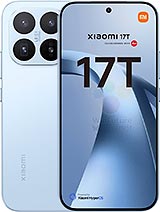

    Xiaomi 17T

    Get the Xiaomi 17T for:

  • The smaller footprint.
  • The better speakers.
  • The sharper telephoto.
  • The largely similar user and camera experience.
  • The lower price tag.

    Xiaomi 17T Pro

    Get the Xiaomi 17T Pro for:

  • The larger display.
  • The longer battery life.
  • The faster charging.
  • The wireless charging support.
  • The considerably more powerful SoC.
  • The 8K@30/4K@120 main camera videos.


Source link

Leave a Reply

Back To Top