








Xiaomi announced that the upcoming Xiaomi 18 Fold will be powered by the in-house Xring O3 chip, the successor to the Xring O1. What happened to the O2? Well, the O3 is so good, that Xiaomi skipped a number – that’s only partially a joke as Geekerwan examined the new chip and it says it delivers a two-generations improvement in energy efficiency compared to the O1.
The Xring O3 is a contradiction – it uses older tech and yet it looks like it can fight the upcoming Dimensity 9600 and Snapdragon 8 Elite Gen 6 chips. For starters, the chip is fabbed by TSMC on a 3nm node called N3P, an improved version of the N3E that was used for the O1. N3P is also used for the outgoing Dimensity 9500 and Snapdragon 8 Elite Gen 5. MediaTek and Qualcomm will use a new 2nm node for their upcoming 9600 and Gen 6 chips.
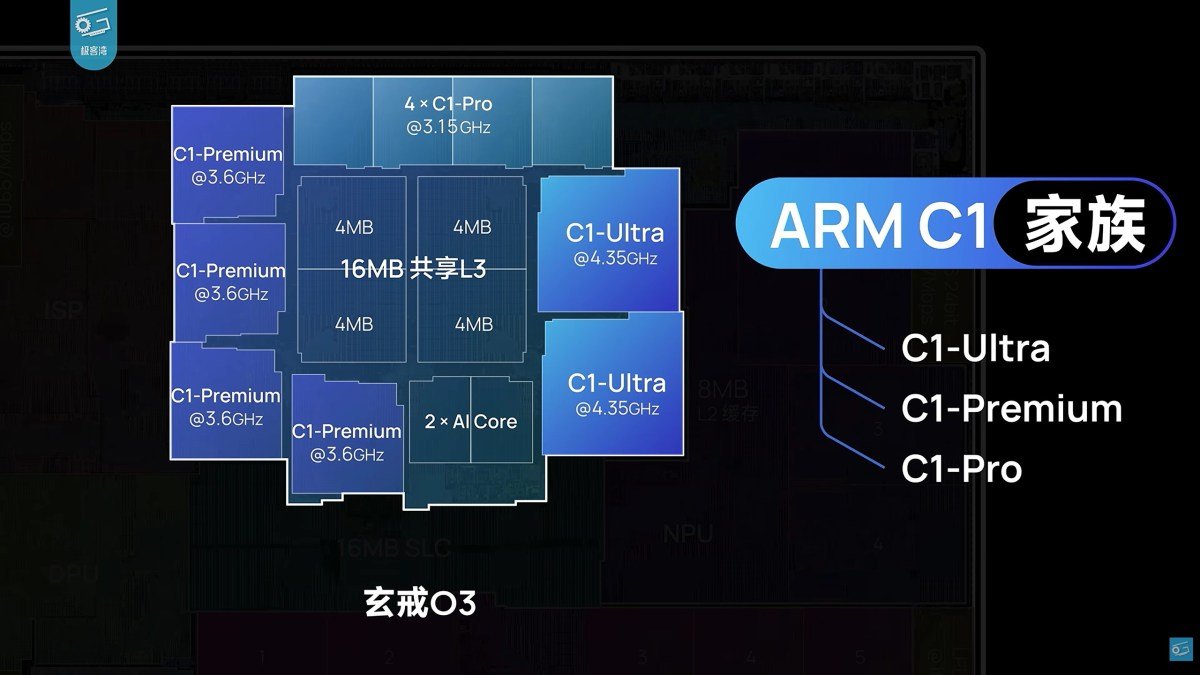
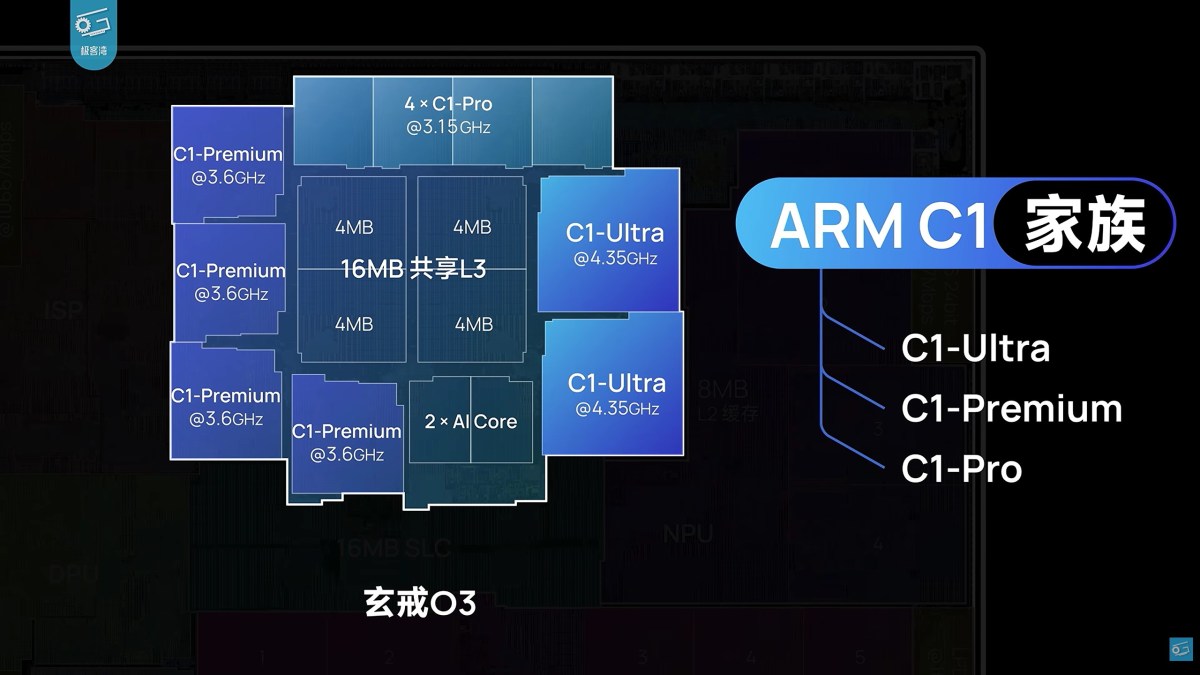
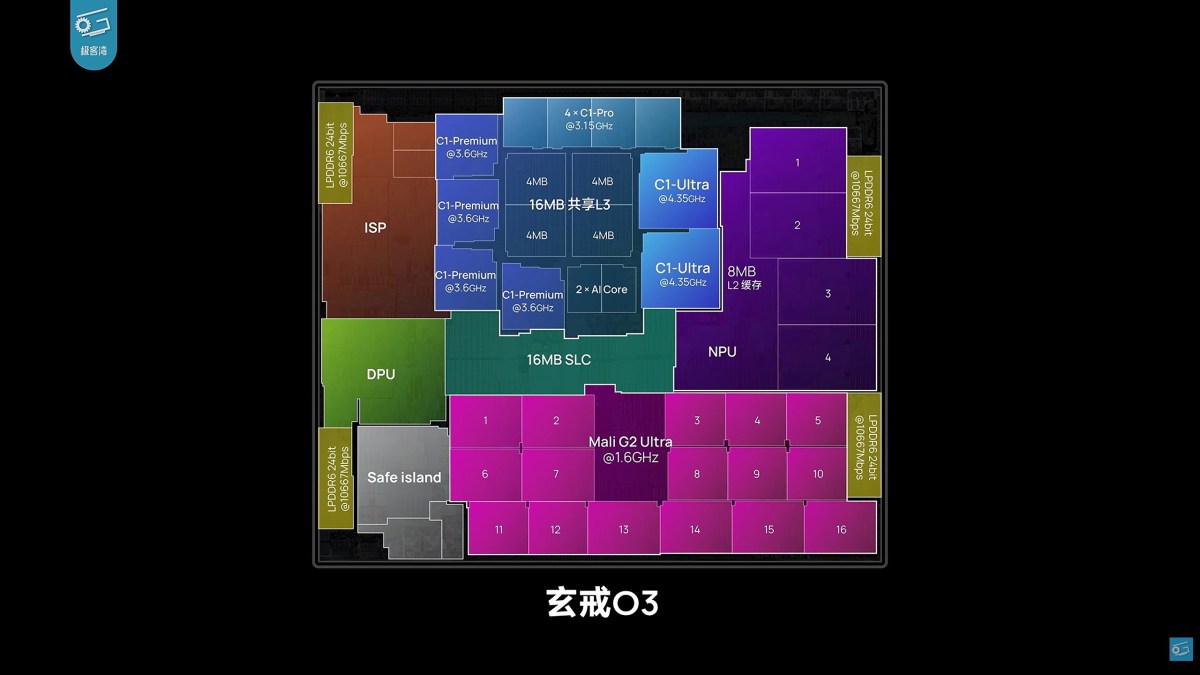
It’s not just that – Xiaomi used Arm’s C1 series of CPU cores, which are already in the Dimensity 9500 and the Exynos 2600. The upcoming Dimensity 9600 will surely switch to the C2 series of CPU cores that should be announced soon.
Even so, the results are quite impressive – the Xring O3 trounces the Dimensity 9500 in performance and energy efficiency and comes close to Apple’s A19 CPU cores.
If the CPU can run at full tilt, it hits the 15,000 points mark in multi-core Geekbench, so it gets close to Apple M5 level of performance. You’ll never see that in a phone, however, as it burns over 20W of power. At more reasonable levels, it can do 12,000 points – this is Snapdragon 8 Elite Gen 5 level of performance – at half the power of the Gen 5.
Note that since the Xiaomi 18 Fold hasn’t actually been announced, the Xring O3 is currently only available for testing on a development board. Geekerwan will re-run the tests once a phone version is available to see if the tighter packaging had a negative impact.
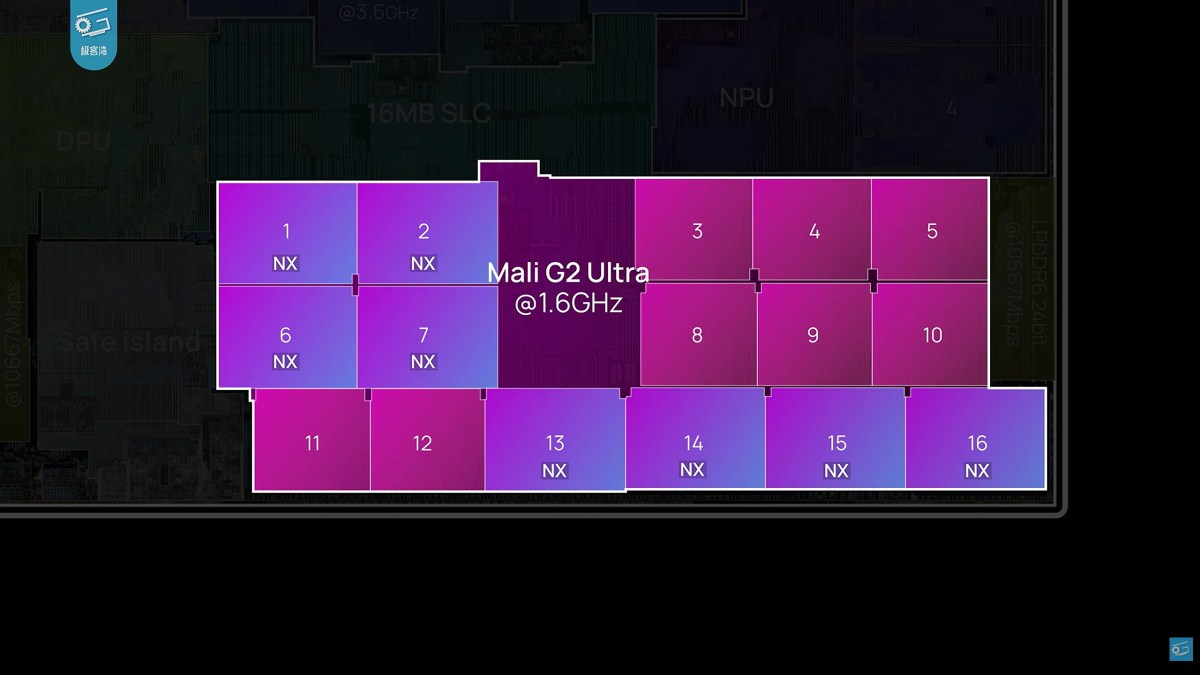
The CPU may use the older C1 cores, but the GPU is brand new – it debuts the Arm G2-Ultra NX MC16 GPU. This is a 16 core GPU with two core types – one regular and one with the NX extension. This adds hardware to help with AI-powered image upscaling and frame generation for games.
The GPU is a proper beast – if we ever see it in a laptop, that laptop will beat laptops with Intel Lunar Lake and come close to M5-powered MacBooks. Or in desktop terms, this beats a desktop GeForce GTX 1060 6GB (while using a lot less power – still more than is available in a phone, though). For phone usage, which is the main use-case for this chip, the GPU offers a great balance of performance and power efficiency – it’s better than the Apple A19 Pro and Dimensity 9500 GPUs.
Again, this performance was achieved on a development board. Said board was equipped with LPDDR6 RAM – each module has a 24-bit data bus, compared to 16-bit for LPDDR5X (which the chip also supports). The board was configured with four modules for a 96-bit bus running at 10,667MT for a total of 113.8GB/s. Whether such configurations are possible on a phone remains to be seen – also, an LPDDR6 configuration will cost more than an LPDDR5X one, so we’ll see how things shake out.
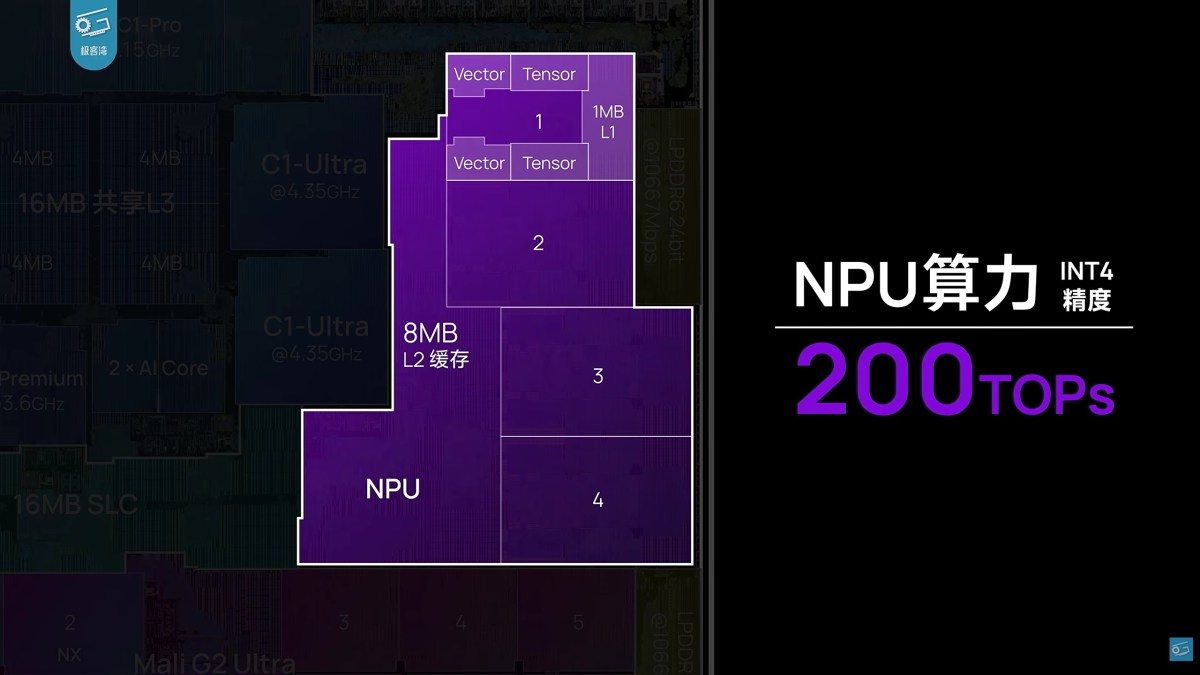
Xiaomi also included an in-house developed NPU, which offers a massive 200 TOPS of performance using INT4. The NPU alone has 8MB of L2 cache and the chip as a whole has 16MB of SLC.
The Xring O3 is a very large chip – Geekerwan measured it at 138.3mm² and keep in mind that the chip doesn’t have an on-board modem. It’s larger than the Snapdragon 8 Elite Gen 5 at 126.2mm², which does have a modem, and is almost the same size as the Dimensity 9500 at 140.6mm², which also has a modem. The Xiaomi team did impressive work at packing in so much hardware, but this can’t be cheap to manufacture.
One area that the team can work on is packaging – the O3 uses the old Package-on-Package approach where the RAM is stacked directly over the chipset. This makes for very short connections between chipset and RAM but isn’t great for cooling. A more modern approach places the chipset and RAM side by side to offer more direction to the cooling system.
We can’t wait to see how the Xring O3 stacks up against next-gen chips from MediaTek, Qualcomm, Samsung and Apple. They will have a node advantage, but Xiaomi’s advanced design might be enough to keep the O3 competitive.
By the way, we’ve seen reports that Xiaomi is banned from using 2nm TSMC nodes (for political reasons), which may be why the company chose the N3P node. We haven’t seen official confirmations of that, however.
PS. Xiaomi also developed an automotive chip called the Xring D100 for use in its vehicles.