








New Delhi: The T20 Mumbai League is back, and with it returns one of Indian cricket’s most significant talent pipelines. Since its launch in 2018, playing three seasons in between, the tournament has helped unearth players who have gone on to showcase their talent at bigger levels and possibly caught the eyes of scouts with Ranji teams, IPL franchises or even India. All this has been done while strengthening the city’s rich cricketing ecosystem.The latest edition – fourth for the men and first for the women – promises to be bigger, with established stars such as Ajinkya Rahane, Shreyas Iyer, Shivam Dube and Shardul Thakur leading franchise teams with Suryakumar Yadav also in the mix.In this conversation, T20 Mumbai League Governing Council chairman Rajdip Gupta discusses the league’s vision, growth ambitions, talent development and long-term future.Excerpts:Q. What are your expectations out of the league? What is the goal?Rajdip Gupta: I think the vision is very clear even in 2018 when the league started. We were very clear we really need to create a world-class platform for our domestic players players who play for clubs, players who play Ranji Trophy and many of them who play for IPL also but I think the idea… the kind of talent Mumbai has, there are thousands of players who are part of Mumbai Cricket Association and play different age group cricket but they need to have some kind of a platform where they can go and showcase their talent so that the scouting teams of Ranji trophy, IPL or India, they should be noticed and I think that is one vision we had very clear how many players from Mumbai can also participate in IPL or India but we really need to create the same platform platform as what IPL is all about. I think we got the success this year and in previous years also, and we spent time, money, energy so that the league should look like an IPL league. So I think our vision is very clear: to provide a platform for our players so they can showcase their talent and get noticed.Q: What is the core focus: build and nurture for the IPL franchises, especially the Mumbai Indians, the state team? How would you measure growth further down the line?Rajdip: It is nothing related to the Mumbai Indians. It is all about a competitive platform. A platform where players are playing along with some of those who have represented India. In this league, there are eight Indian players who are part of different franchises. So somebody like Suryakumar Yadav sharing a dressing room with a young kid, and they can learn a lot from these stalwarts also. The idea is how much they can learn from these stalwarts. I think that’s one focus. Cricket is a competitive game and very intense as well, so I think the intensity of the game is increased to another level.
Do you believe the T20 Mumbai League will help women players gain more recognition?
10 to 15 years ago, 220 was a good score in a 50-over match. Now we get to 250-270 in a 20-over (match). That is the scale to which the game has changed. I think that requires a mindset, lots of preparation and in such a case, if a young boy is playing with all these players, they get lots of learning. There can be a match situation for a bowler like 14 needed in six balls or 35 needed in six balls for a batter, and if he’s playing along with Surya, he can learn how Surya thinks in those situations, how a captain like Ajinkya Rahane thinks in those situations. So the overall idea is the vision, focus is to create an entire ecosystem of exposure.
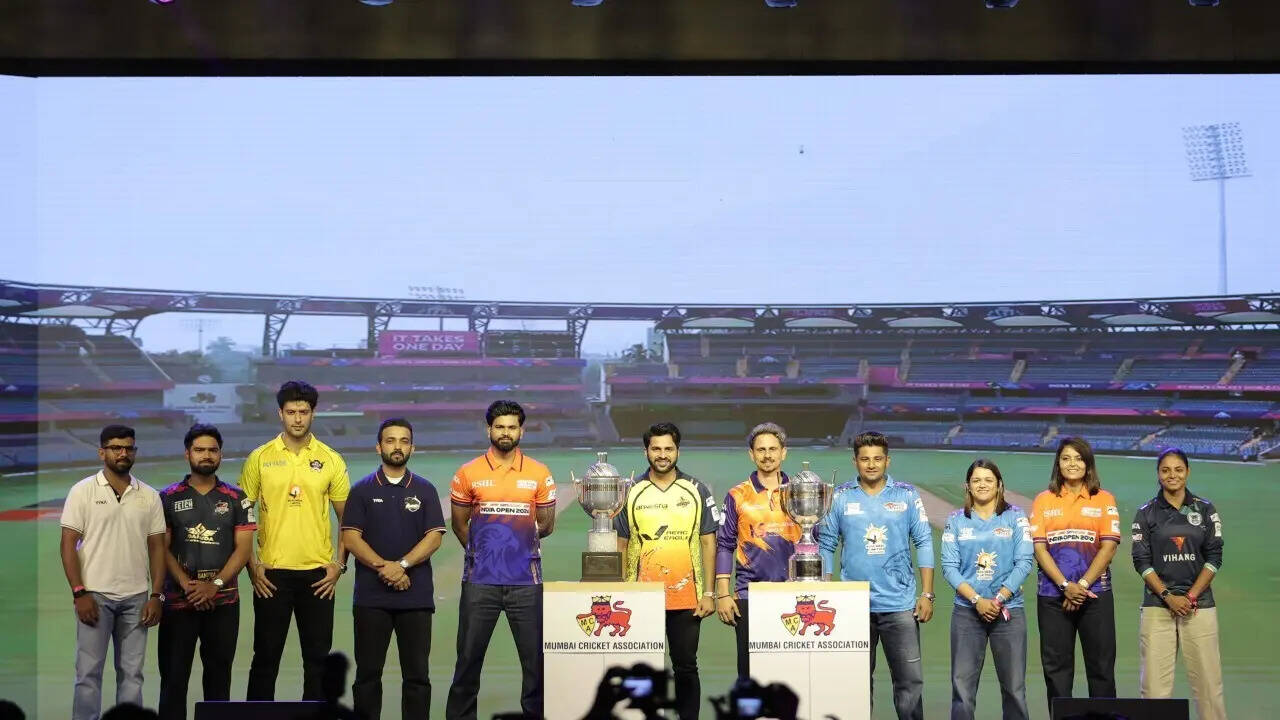
Players during the launch of the T20 Mumbai League men’s and women’s competitions.
Q: Mumbai has a rich cricketing culture from age group cricket to club to state to the franchises. How do you ensure the league strengthens that culture rather than becoming just another short format tournament?Rajdip: So I think Mumbai Cricket Association is not looking at it as another short format league. It has a vision and statement itself. This is the first year we have the Women’s T20 League as well. So women also play a very critical role in our entire ecosystem. You know, it is not just a platform to be created for the boys. At the same time, what are we doing for our women cricketers? I think the Mumbai Cricket Association took that step. If we have a Mumbai T20 League for men, we should have one for women also. So that women also get the equal opportunity to perform and do well along with the India players, and there are many India players also participating as well. So I think it is not another short format league.It’s very different compared to any other state league. If you see the impact we are creating in today’s game, I think we have seen players coming forward and performing and playing against Indian players. Just today, Surya got bowled by a player who is playing in the F Division or C Division team. It is a great achievement for that player.So I think this is the mindset we need to create. Everything is possible at Mumbai Cricket Association if you are hardworking and you do your basics right.Q. How does this league help in taking a young boy or girl from an U-14 level, U-16 level to the clubs and to this level now? How do you bridge that gap?Rajdip: It was clear when we started with our auction plan. Every team should have a minimum of two Under-19 players. Then Emerging Players, U-23 players, and we made sure that every Playing XI should have one Under-19 player. It is not that they (franchises) just took somebody or he’s sitting doing nothing. He should be an equal part of the matches, and it is mandatory for all teams to involve one during the match. In terms of emerging players, Under-23 players, you need to have a minimum of 2 or 3. Then Ranji, IPL or India players. So I think we’ve made it very clear what we are trying to achieve out of this. Is it another league just to think about the commercial angle? No, it is not like that. It is where every age group should get an equal opportunity.
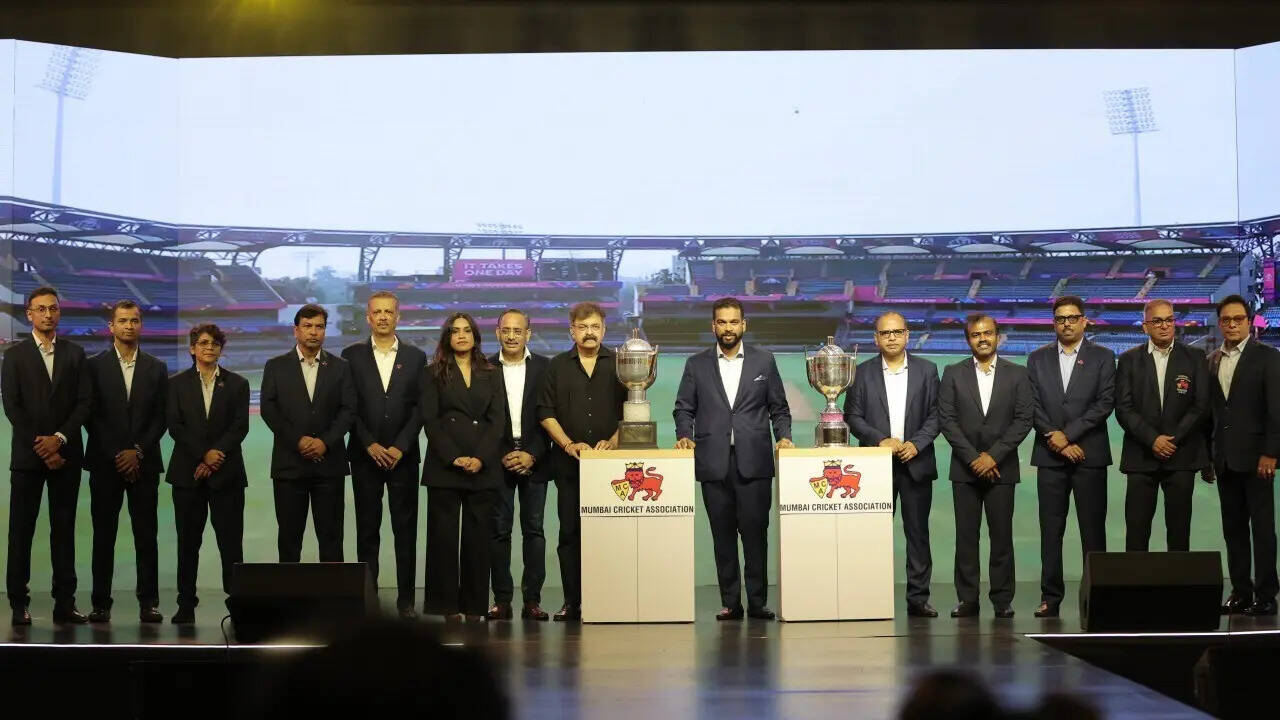
Photo from the launch of the T20 Mumbai League.
Q. You mentioned that the commercial aspect is not the main point, but it is very important to keep the competition going. So how much of a focus is on that and how do you maintain balance?Rajdip: The commercial angle is everything. Right now, to run a league, you need money, and you need franchises; you need franchise fees, you need people to spend, and everywhere you need sponsorship also. So commercially, a league is only viable if you have a good amount of sponsorship, good brands of sponsors.So I think this year we got a title sponsor, we got a co-sponsor, we got a league sponsor, we got an associate sponsor. At least people started seeing value because if they are spending, say Rs 5 crore or 10 crore or 2 crore, the kind of mileage they are getting out of this league because there are 8-10 India players also coming, their logos are there, something they can otherwise get at 20-30 crore- they are getting much lower value with this league. It is covered on Hotstar, covered on Star Sports; that’s another mileage they get. So I think the commercial angle is definitely (important).If I say there is no commercial piece attached to it, no. There is indeed a commercial piece. There are franchise owners; everybody wants to make money, everybody wants to create a valuation. I think the way the league is now, we are in season 1 for the women and season 4 for the men. I think next 2-3 seasons, you will see this league will be commercially much more viable.
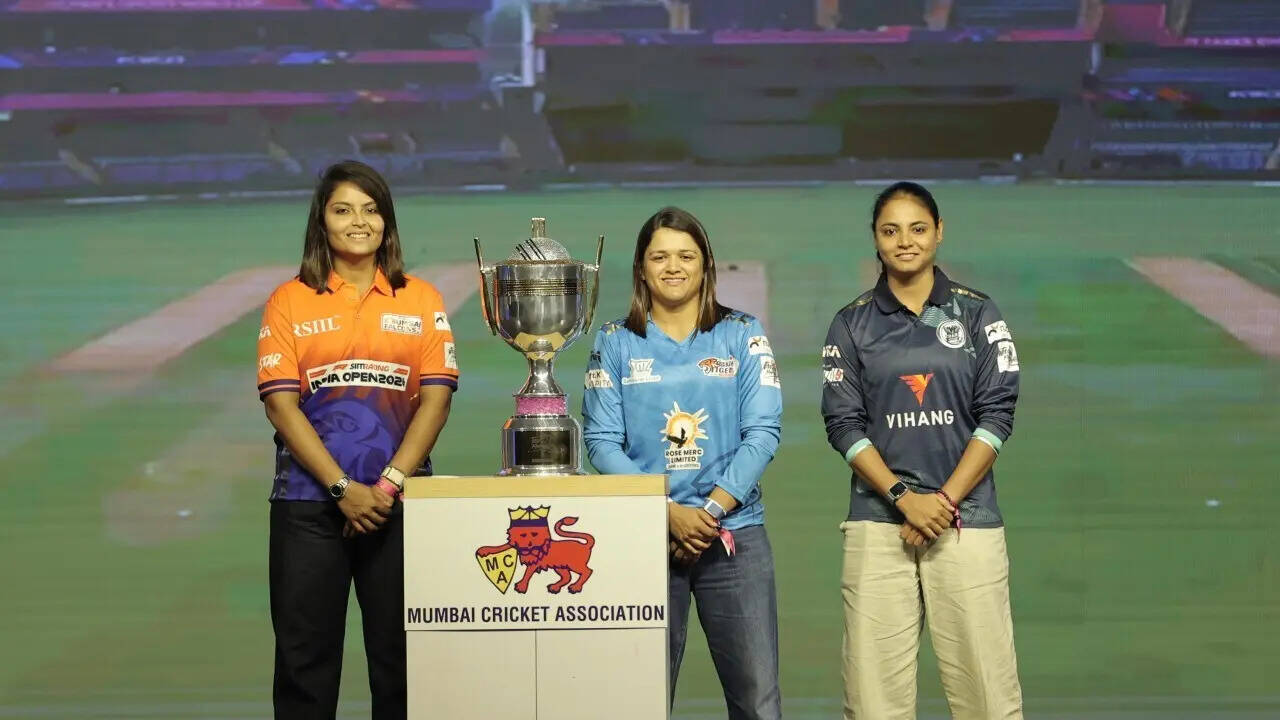
MCA has announced the T20 Mumbai Women’s League for the first time.
Q. Coming to the women’s side of things. It is the first season; there were six bids for a team, and three have been selected. When we talk about the women’s competition, what is the roadmap?Rajdip: So if you see the women cricketers in Mumbai who play multiple club levels, there are almost 300-400 or maybe more than 500 women cricketers playing in different age groups in Mumbai today. If I really stick to just 3 teams, I am not doing them justice. Probably next year, we are going to add one more women’s team along with the men’s team also because we really want to make sure more players get an opportunity. So the idea is very clear: we are going to add one more team next year for women because we definitely believe that Women’s League is very, very critical for Mumbai Cricket Association and we can create a platform for them. So we have a very clear vision for the next 2 or 3 years down the line of what exactly we want to achieve, and we are working towards that.Q. You have also been part of another league in the ISPL as a co-owner. How have learnings there helped you here in this league?Rajdip: Apart from this, I am a tech founder; I have founded a company, I am a businessman, I know how the business works, I know what things are required. In the ISPL, being a team owner, you have a different experience and running a league, you need a different experience because you need to work with multiple people, and you need to understand the owner side, association side and then decisions need to be made.I will say that my past experience coming from a corporate background has added more advantage for me to take things smoothly rather than what I have learned from leagues, because as a team owner, you have very little to contribute compared to running a league.
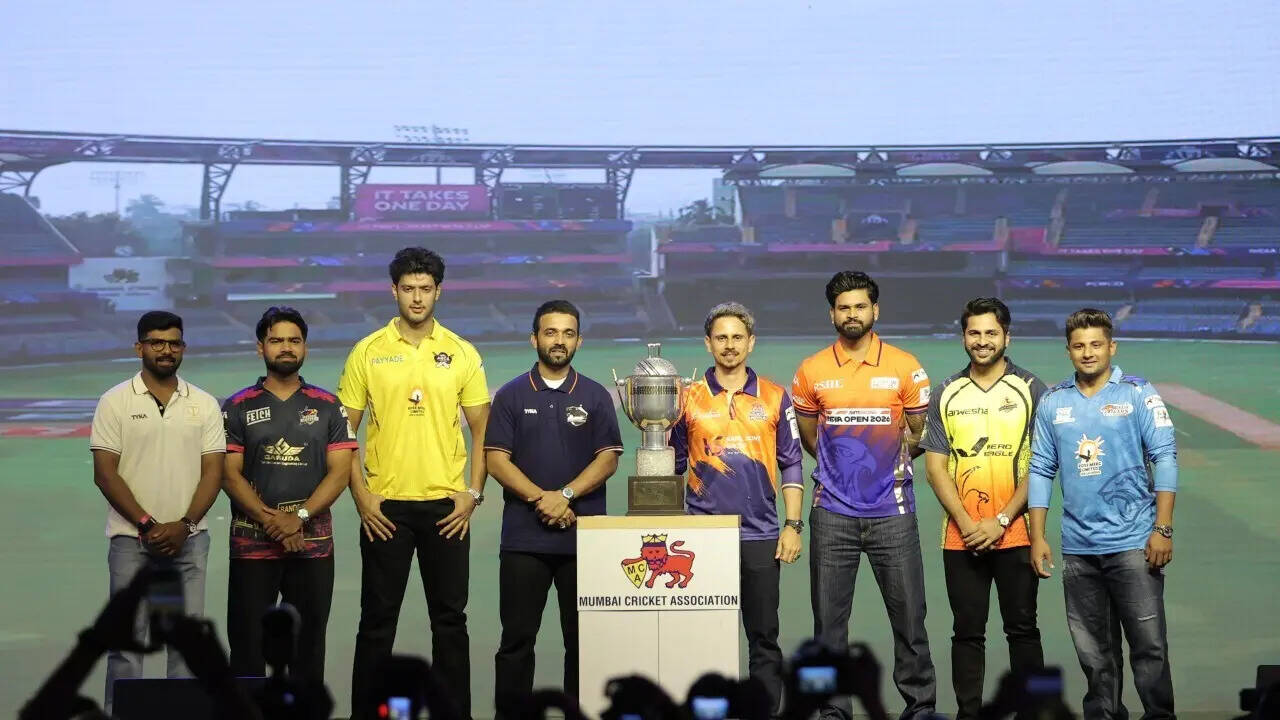
Players during the T20 Mumbai League launch.
Q. Five years from now, what would you say makes the T20 Mumbai League a success, not just commercially, but also in terms of what you represent for a player?Rajdip: So at Mumbai Cricket Association, we always have this mantra: player first. Players are our asset as an association; whatever we are today is because of our players and I think we work to make sure they get nurtured well, they get equal opportunity.Five years down the line, we want to make sure this league gets bigger, and more players get an opportunity, and apart from that, commercially also, like media rights to satellite rights. I think there are many things which need to be worked out in the next two to three years. What are the things required to be one of the most successful state-level leagues after IPL? That’s exactly what the vision is all about.