







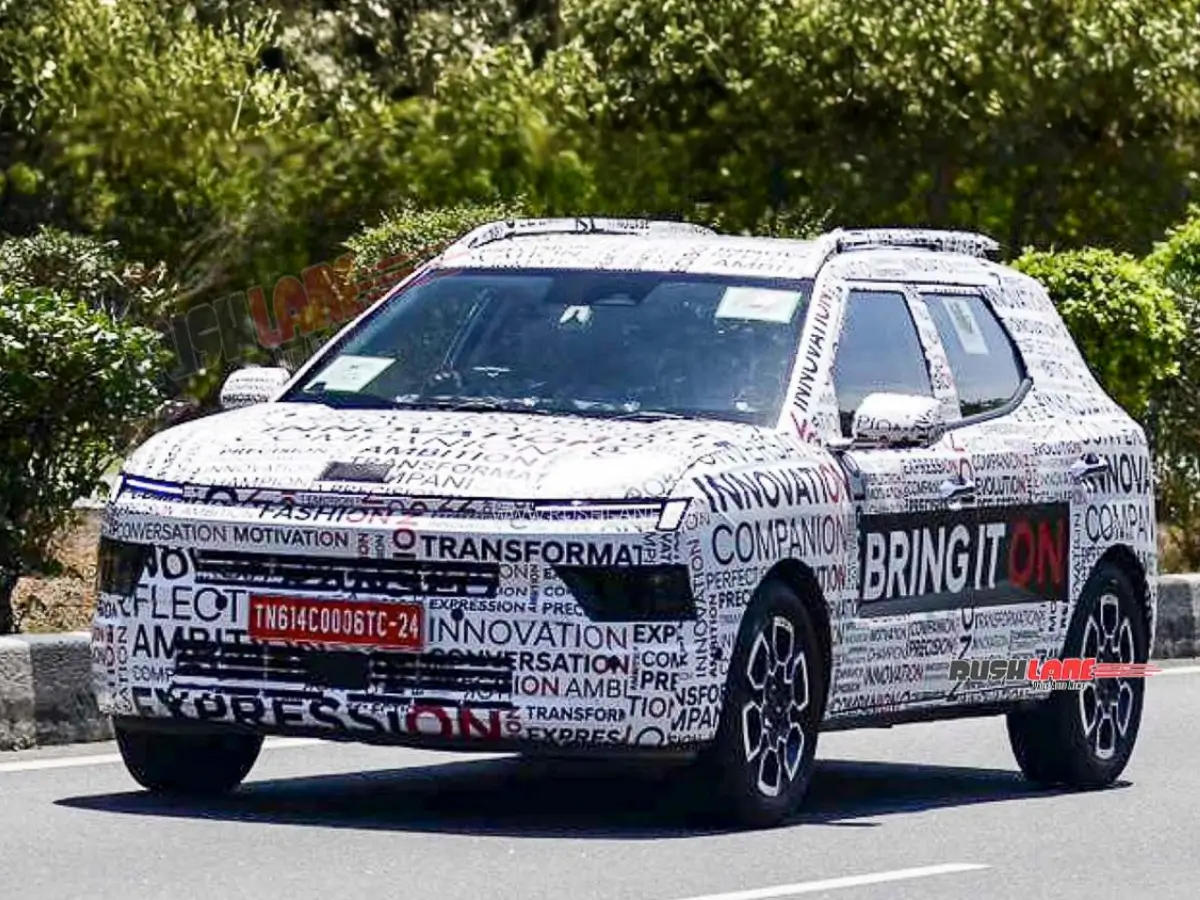
Frequent sightings of the upcoming Hyundai midsize SUV indicate that the model is undergoing extensive testing ahead of its launch around Diwali 2026. However, the latest test mule features unique camouflage carrying a “BRING IT ON” message, along with words such as Companion, Expression, Transform, Inspiration, Innovation, Ambition and Reflection. Since the new Hyundai SUV is widely expected to be based on the global-spec Hyundai Bayon compact crossover, the model is likely to retain the Bayon nameplate for the Indian market.
Design Highlights
While the test mule conceals most of its design details, the upright stance, pronounced wheel arches, a flat roof and pull-type door handles are clearly visible. The SUV also appears to feature thick cladding on the wheel arches, alloy wheels, an upright rear windshield and a tailgate with a horizontal running lighting element.

Expected Features
Inside the cabin, the upcoming Hyundai Bayon is likely to feature a large touchscreen infotainment system, a digital driver’s display and a steering wheel featuring Hyundai’s four-dot signature. In terms of features, the SUV is expected to offer leatherette upholstery, front and rear parking sensors, wireless Android Auto and Apple CarPlay, rear parking camera, a sunroof, a 360-degree camera, multiple airbags and ADAS.
2 Engine Options
The new Hyundai SUV is expected to be available with a 1.5-litre naturally aspirated petrol engine, borrowed from the Creta. Buyers are also likely to get a CNG option, featuring an underbody tank. This setup will should help preserve usable boot space. Both manual and automatic transmissions are likely to be on offer.
New Hyundai EV By March 2027
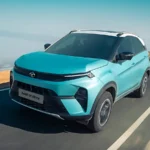
Following the launch of the Hyundai Bayon, the Korean automaker will introduce a new compact electric SUV, based on the E-GMP (K) platform. Hyundai has confirmed that the EV will go on sale by March 2027. Hyundai’s manufacturing facility in Tamil Nadu will serve as production hub for the new locally-developed EV. The new electric SUV will compete with the Tata Nexon EV and Mahindra XUV 3XO EV.
Image source